PSYCH 7 “Theories of Personality” Final - Collages for Each Chapter
My choice for the final project in Dr. Morabito’s Theories of Personality psychology class draws from my personal collage practice and professional work in art therapy.
Presented for your viewership are a series of 12 collages inspired by the main principles of each chapter that we covered in our textbook. An explanatory paragraph accompanies each image, describing what you are seeing. My primary source materials are LIFE magazines from 1950s–1970s - all analog, all the way!
This content is created without any assistance from artificial intelligence. Enjoy!
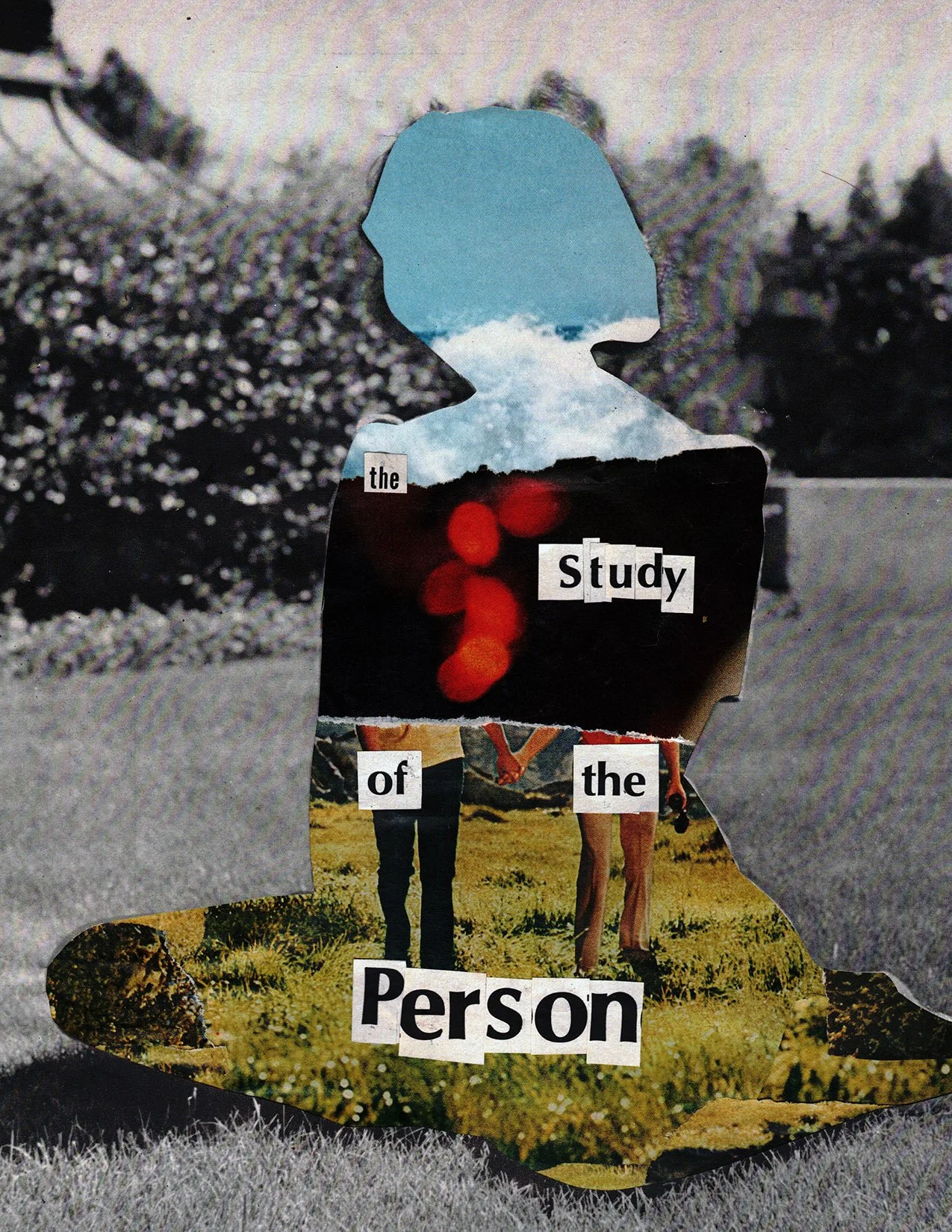
Ch 1 – The Study of the Person
Personality psychology is the study of how an individual person thinks, feels, and behaves. There is complexity when these realms are in conflict.
This collage symbolizes this central concept using a seated woman’s silhouette filled with 3 abstracted layers: a blue sky for conscious thoughts on top, a dark and moody space for unconscious feelings in the middle, and a grassy field with two humans holding hands for observed behaviors.
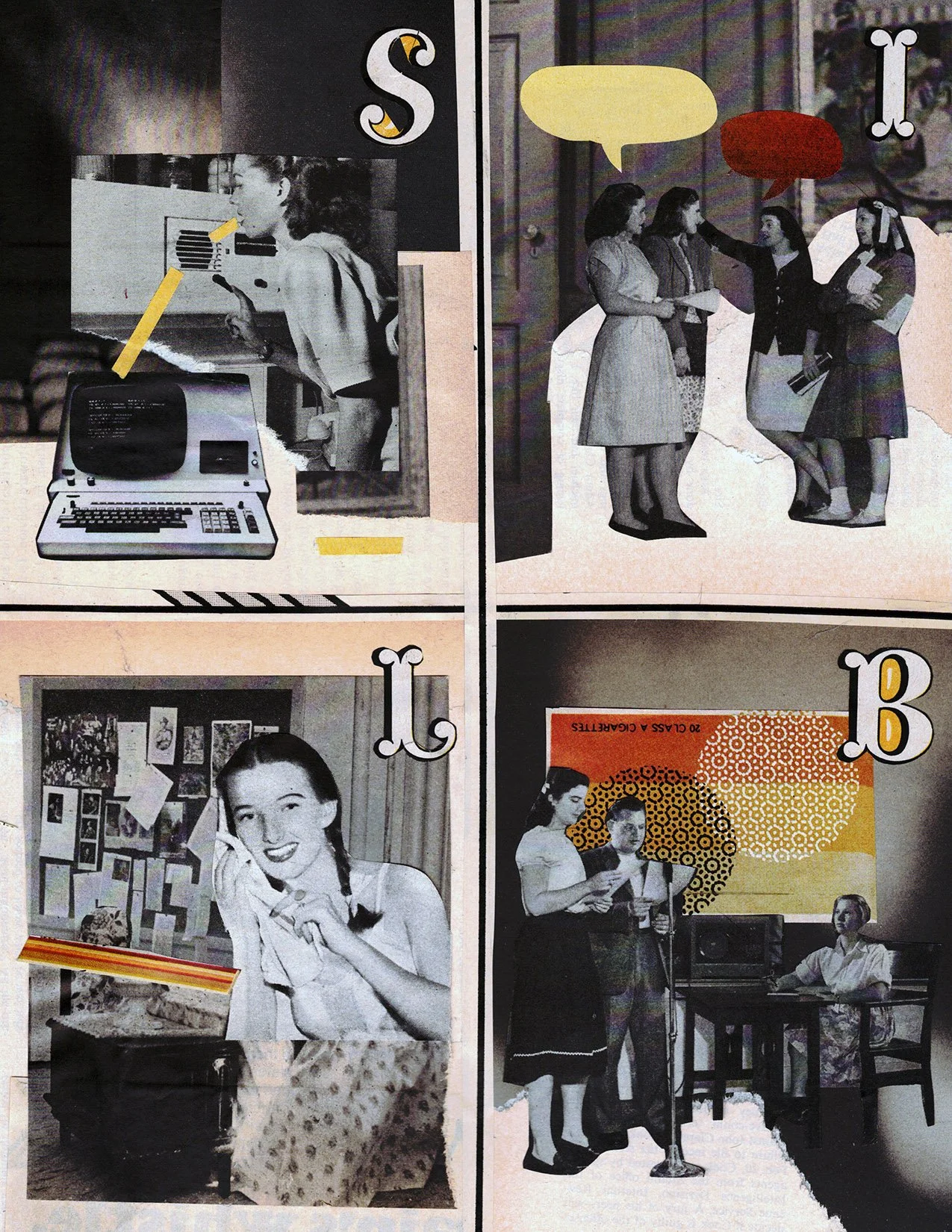
Ch 2 – Personality Data
Personality data is comprised of S-Data, I-Data, L-Data, and B-Data. Each square in this collage shows a tableau of the data type in action being done by different individuals.
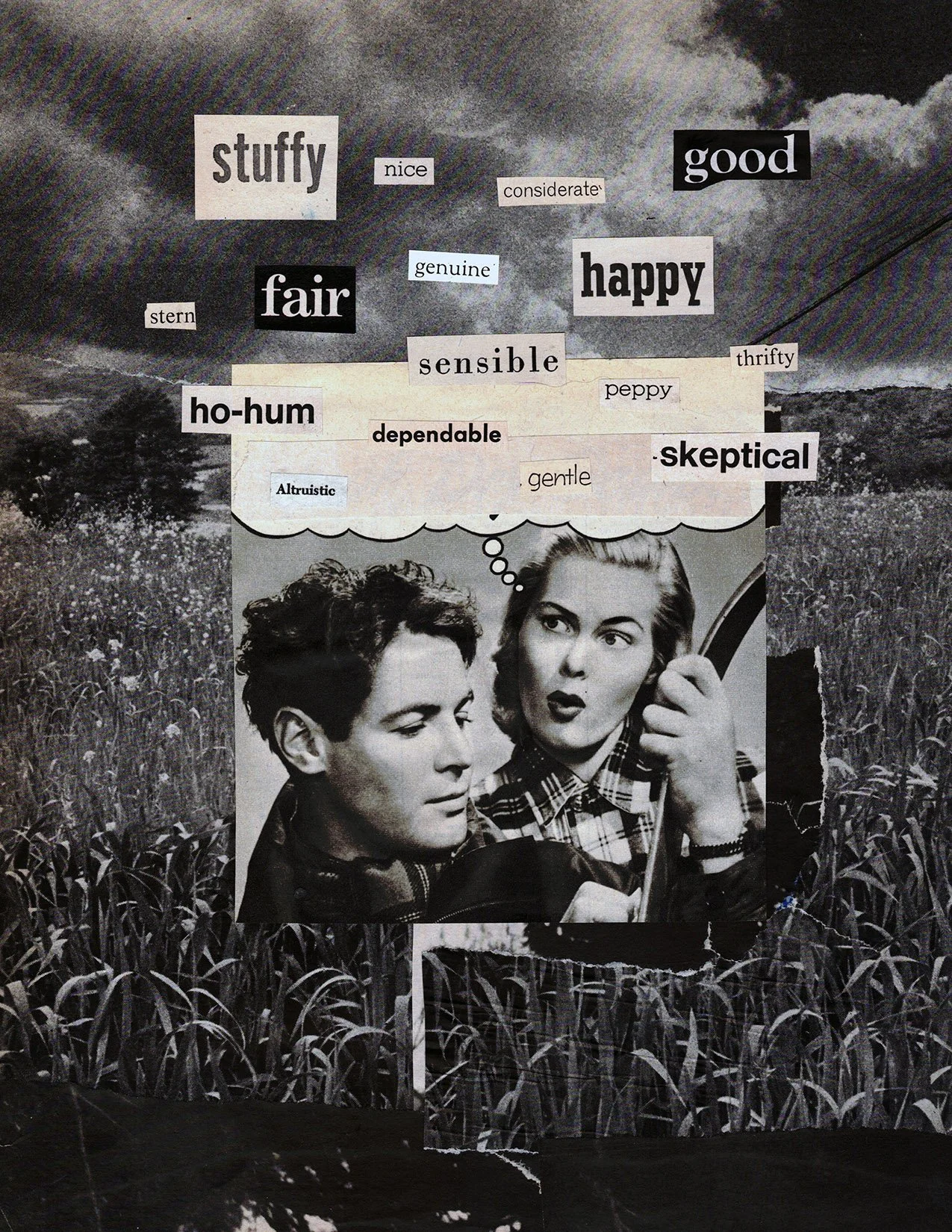
Ch 4 – Persons, Situations, and Personality Judgment
A woman looks comically judgmental towards a man, as isolated adjectives float above their heads in a thought bubble. Everyday human observation gave us everyday language to characterize people.
“Every person is like all other people, like some other people, and like no other person.”
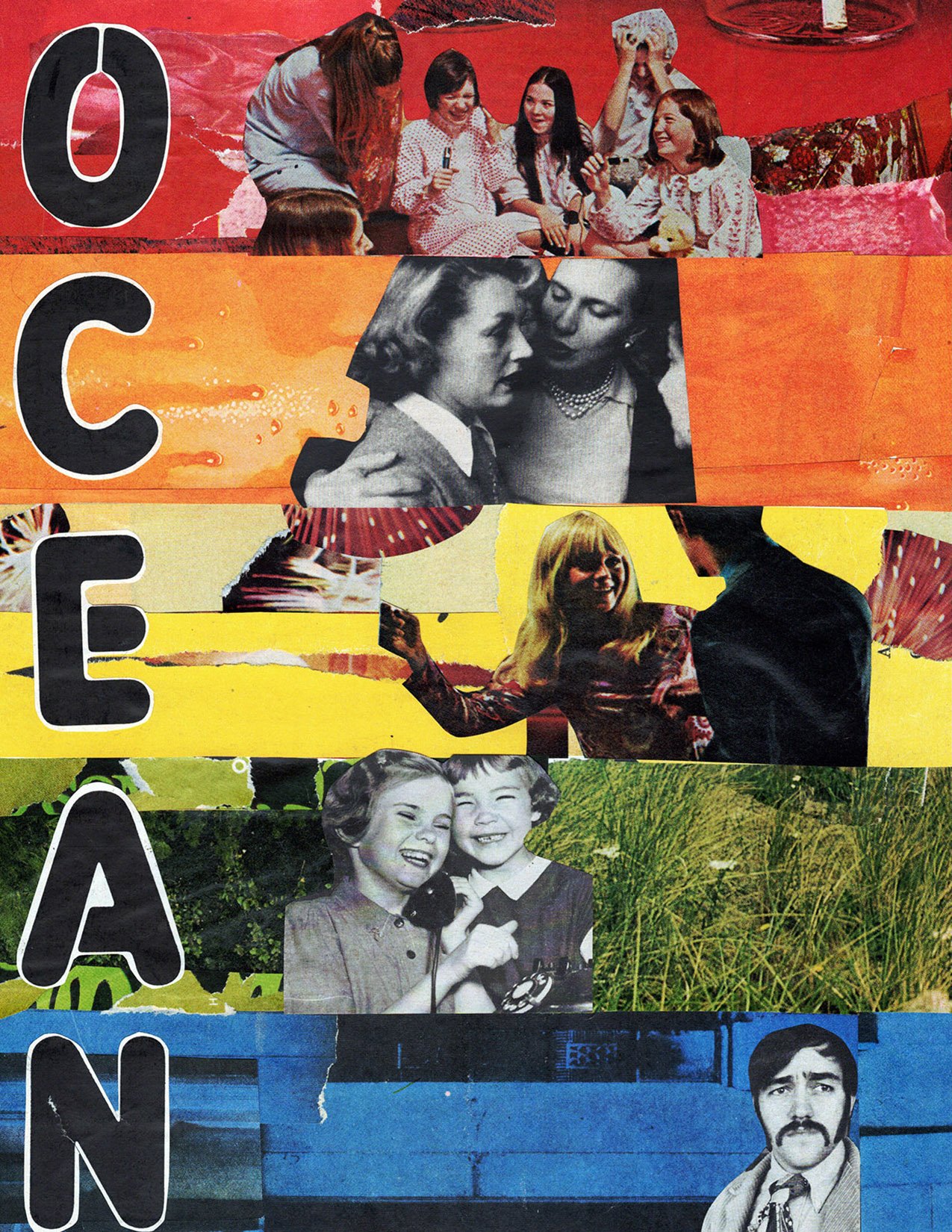
Ch 5 – Traits and Types: The Big Five and Beyond
Openness, Conscientiousness, Extroversion, Agreeableness, Neuroticism. The Big 5 personality traits are each given a strip from a rainbow color scheme and an example of people expressing the corresponding trait.
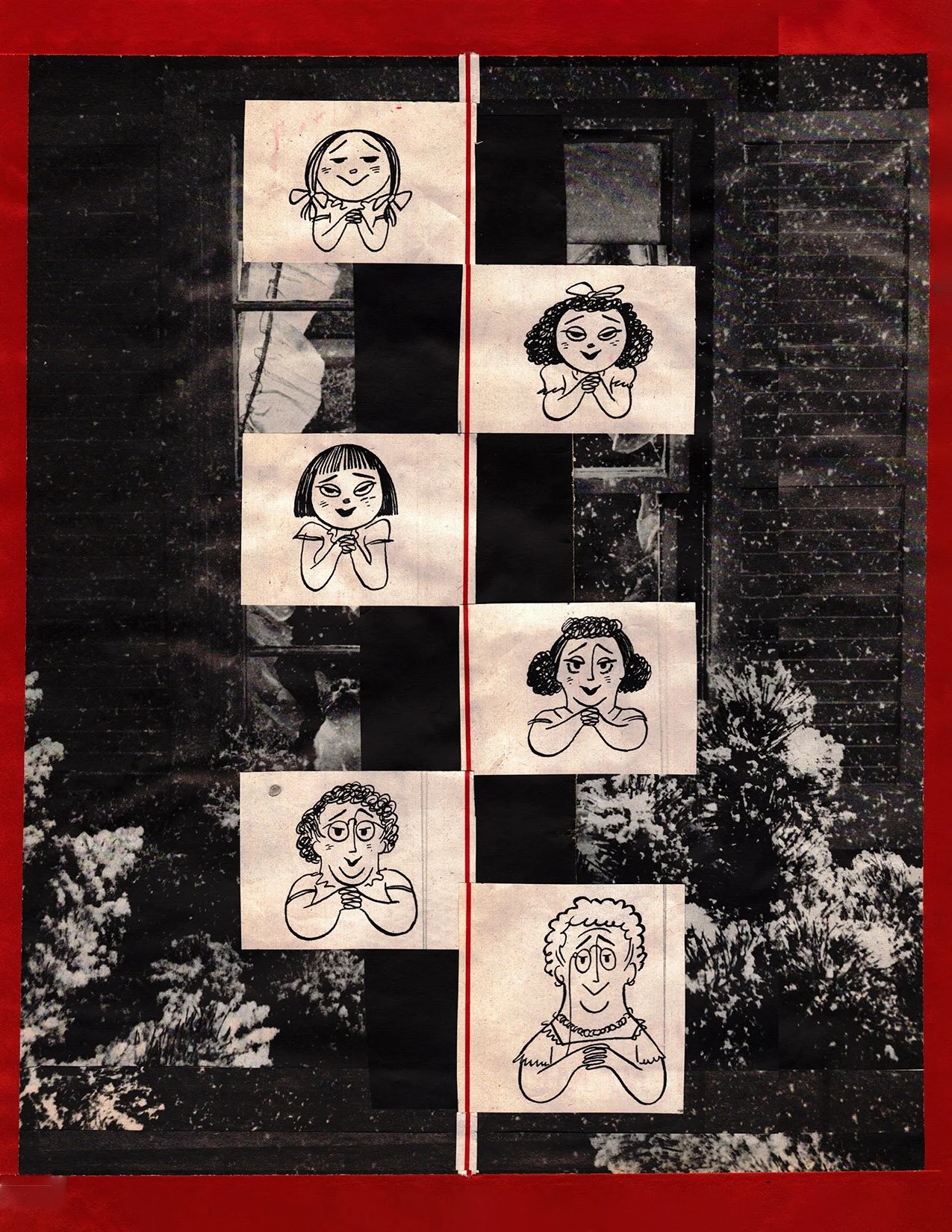
Ch 6 – Personality Stability, Development, and Change
An individual woman ages from girlhood to cronehood, keeping the same personality trait of agreeable admiration while her body changes throughout her lifespan.
I kept this one simple and uncluttered, using a timeline element to tell the lifespan story without undue embellishment.
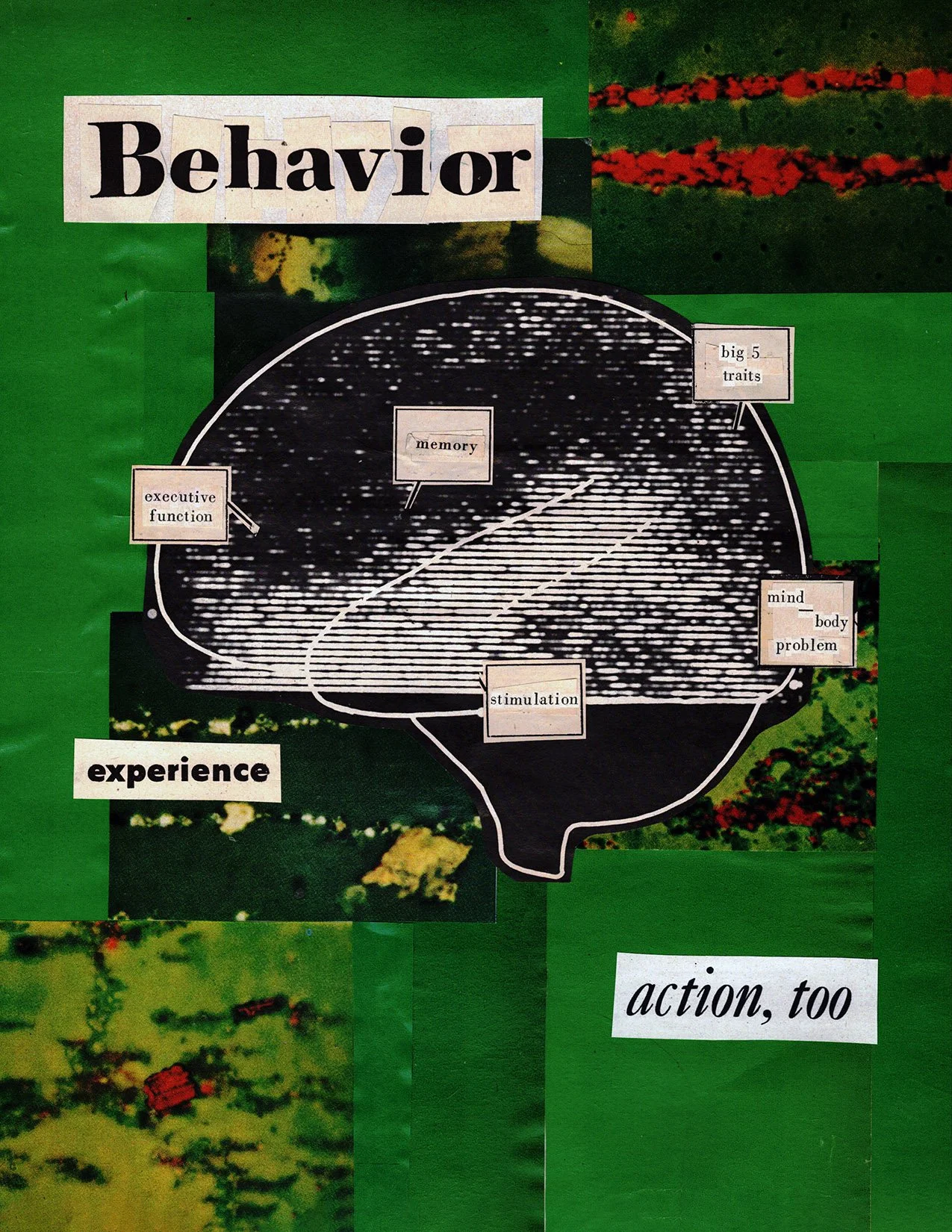
Ch 7 – The Anatomy and Physiology of Personality
A 1970s computerized image of brain activity is matched with call-out boxes highlighting key concepts of this chapter. Certain brain structures are associated with personality traits, but we cannot definitively prove this. Close-up images of hormones and neurotransmitters form the background.
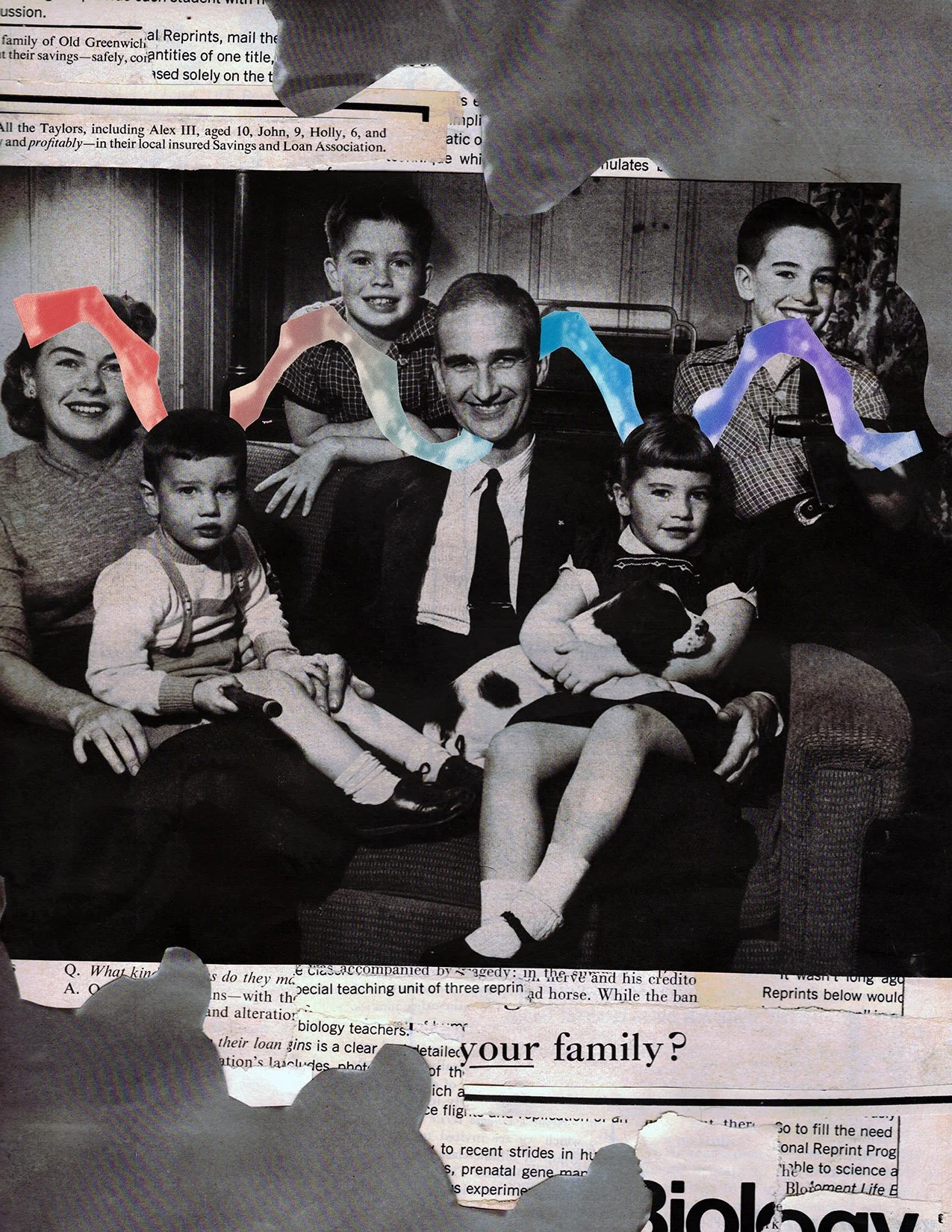
Ch 8 – Evolution and Genetics: The Inheritance of Personality
The colorful ribbon of a genetic sequence touches each person in this monochrome family portrait, symbolizing the inheritance of genetic traits from parents to their children.
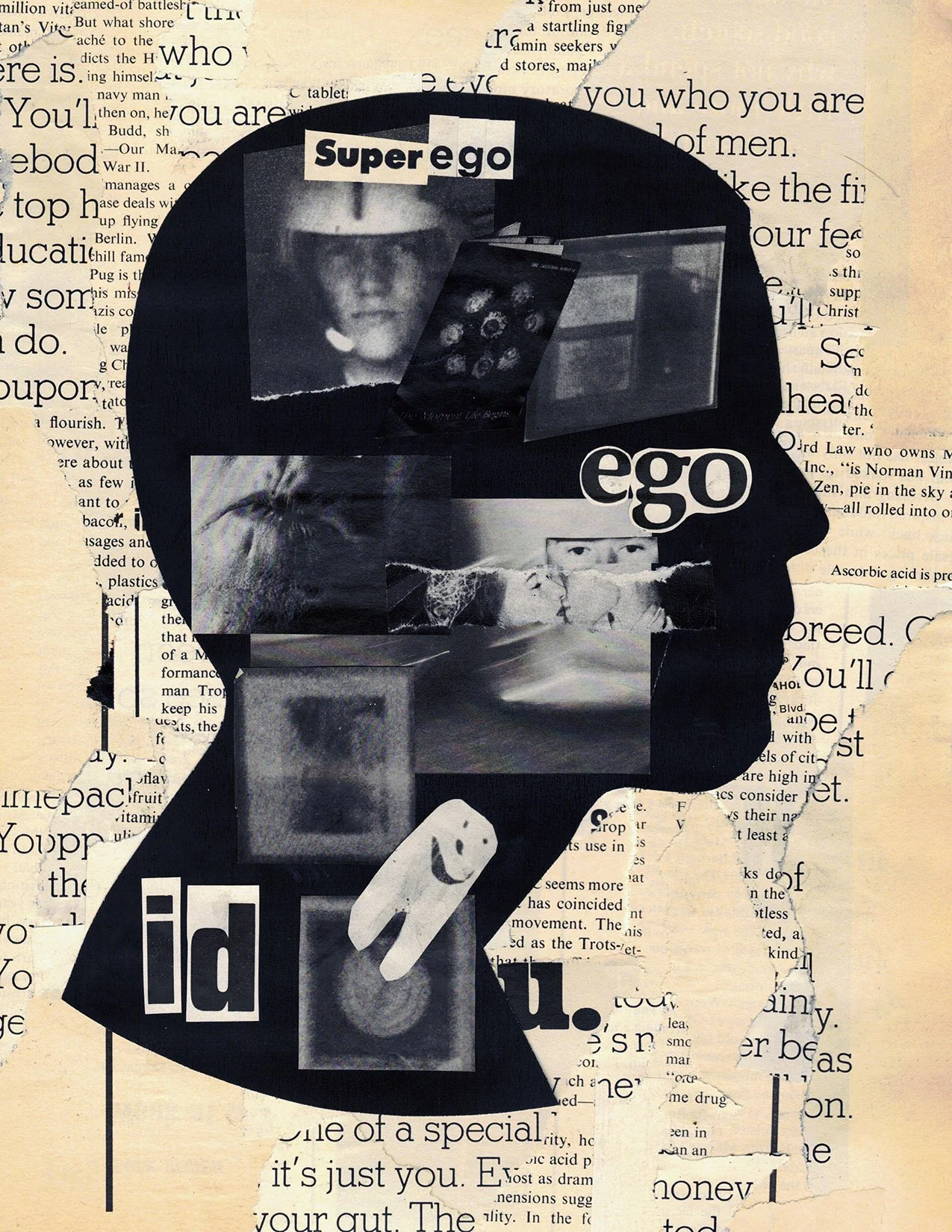
Ch 9 – Basics of Psychoanalysis
This chapter covered Freud, his theories of psychoanalysis, and his lasting impact on the field of psychology.
I chose to illustrate his 3 most enduring concepts, the id, the ego, and the superego, within the mind of a man. Imagery that relates to each concept is layered, showing how the conscious top differs from the unconscious bottom.
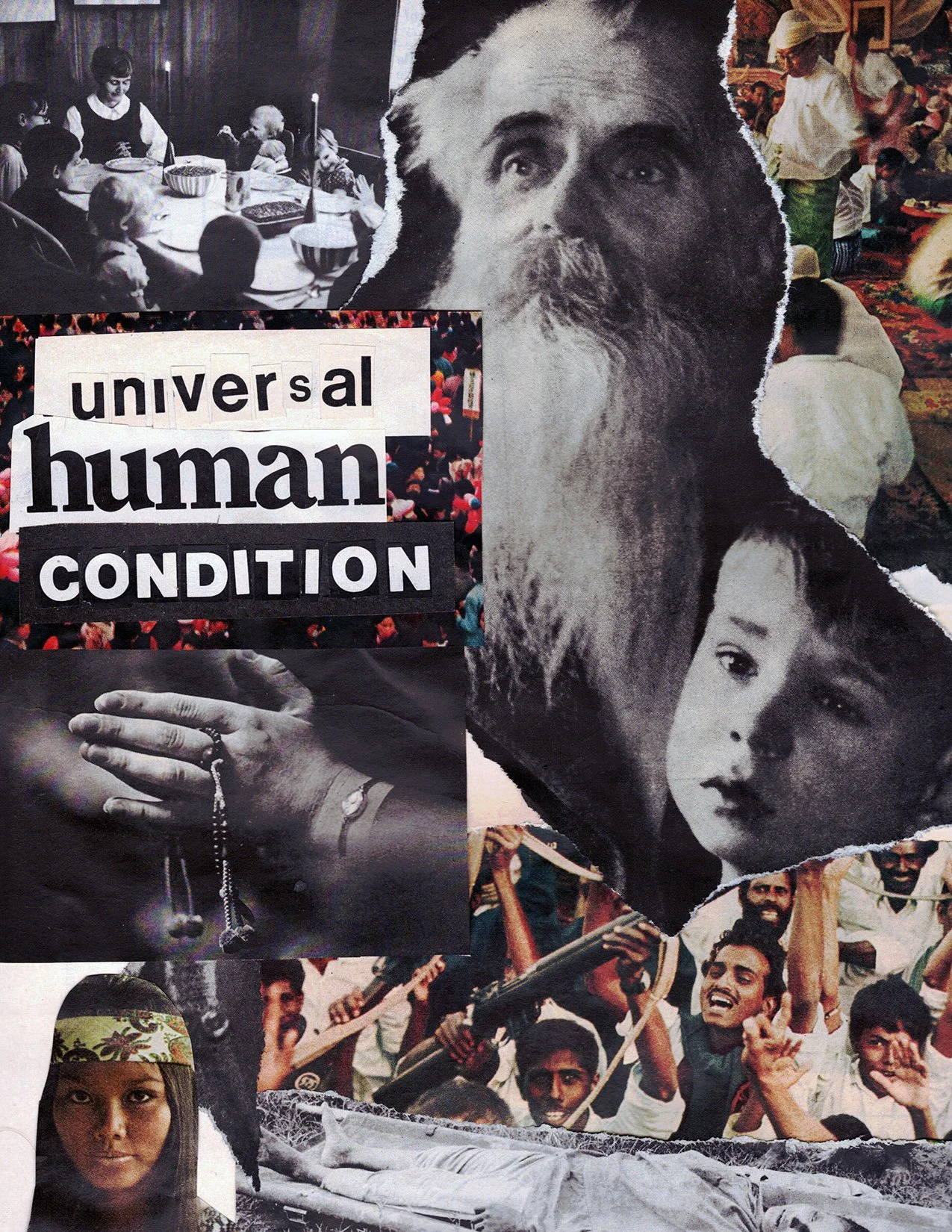
Ch 12 – Cultural Variation in Experience, Behavior, and Personality
I chose to emphasize the “universal human condition” mentioned in this chapter, as we all go through the many common experiences of being human, such as seeking community, witnessing death, joyful triumphs over suffering, and religion, and how these all factor into how personalities are both alike and unalike depending on what culture you come from.
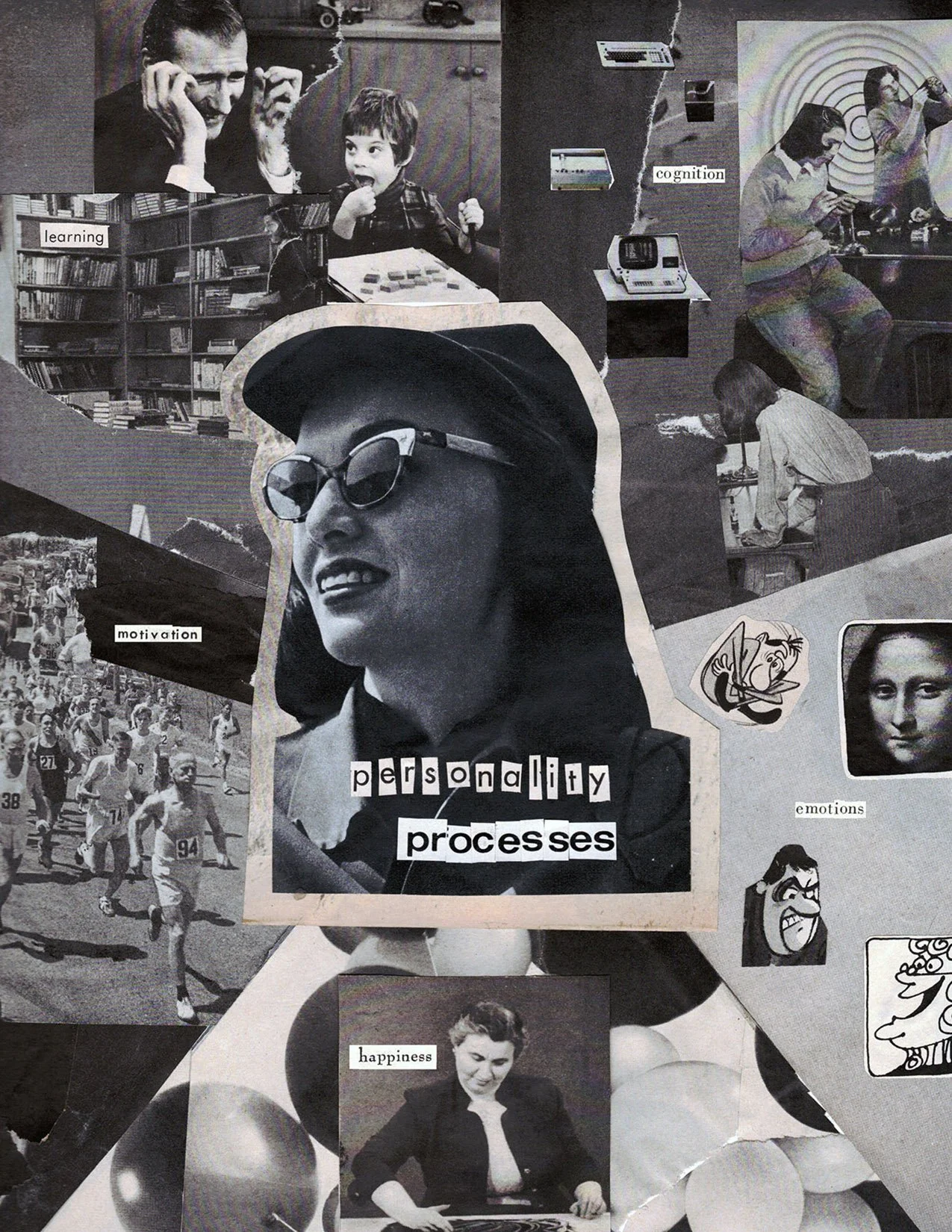
Ch 13 – Personality Processes: Learning, Cognition, Motivation, and Emotion
In clockwise from top left, the chapter’s main concepts are shown: Learning, Cognition, Emotions, Happiness, and Motivation. A stylish lady in the middle of the composition suggests that these 5 concepts are shaping her personality.
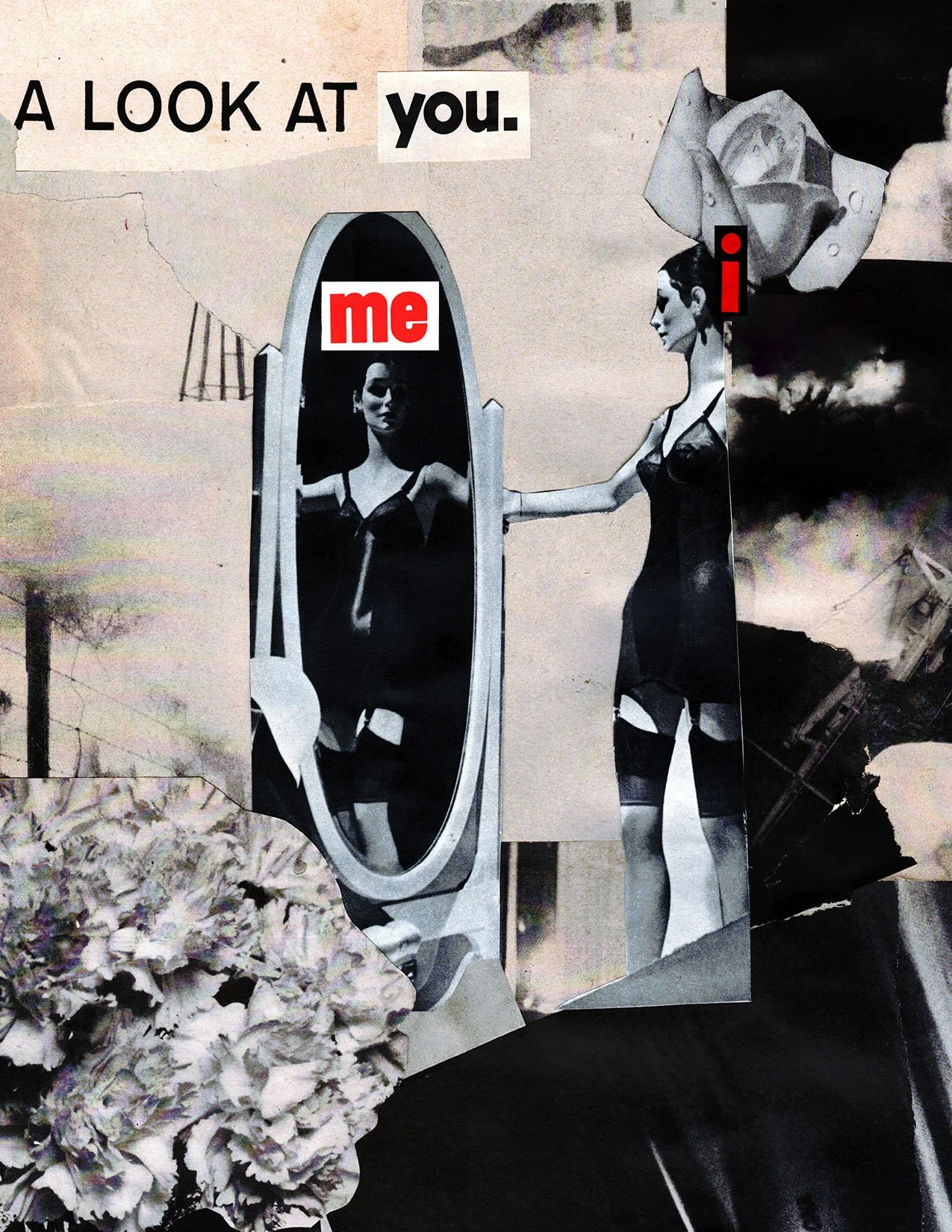
Ch 14 – The Self: What You Know About You
A surreal, simplified exploration on the central discussion of this chapter: The I and the Me. The self that is doing the looking; the self that is being looked at. Self-observation and self-awareness are represented by the mirror.
“The I is unaltered as the me is changed” (William James, 1890).

Ch 15 – Relationships & Business
Split into two sides are the realms of Love and Work.
Light, positive sentiments around filial, parental, heterosexual, and homosexual relationships are seen in the top for Love.
Meanwhile, Work uses darker colors to symbolize the effort and stress put upon our personalities in the business world.
