RoleProduct Designer & Project Manager
SummaryForgotten Felines of Sonoma County is a nonprofit cat welfare organization whose mission is to spay and neuter all of Sonoma County’s unowned cats. For 35+ years, they have altered over 60k feral felines through TNR (trap-neuter-return) methods of population control.
FFSC realized they were in great need for a centralized data platform to more effectively manage the thousands of records across multiple analog and digital touchpoints and provide a proactive approach via data analysis and strategic insights to achieving their mission statement. With the advent of generative tools, this dream became possible to realize.
Working with the Executive Director, Trapping Coordinator and a team of junior engineers, I helped write the product strategy, perform user research, and ideate on user-centered designs for Beacon (the Sonoma County Cat Tracker), a centralized digital data platform that consolidates all cat, people, and place data into a single, accessible system.
Beacon integrates modern data repositories, automated workflows, and UX/UI best practices to streamline intake and triage, capture real-time clinic data, and surface key insights through intuitive dashboards.
OutcomesBeacon is proving to be instrumental in modernizing the workflows for the team at Forgotten Felines of Sonoma County.
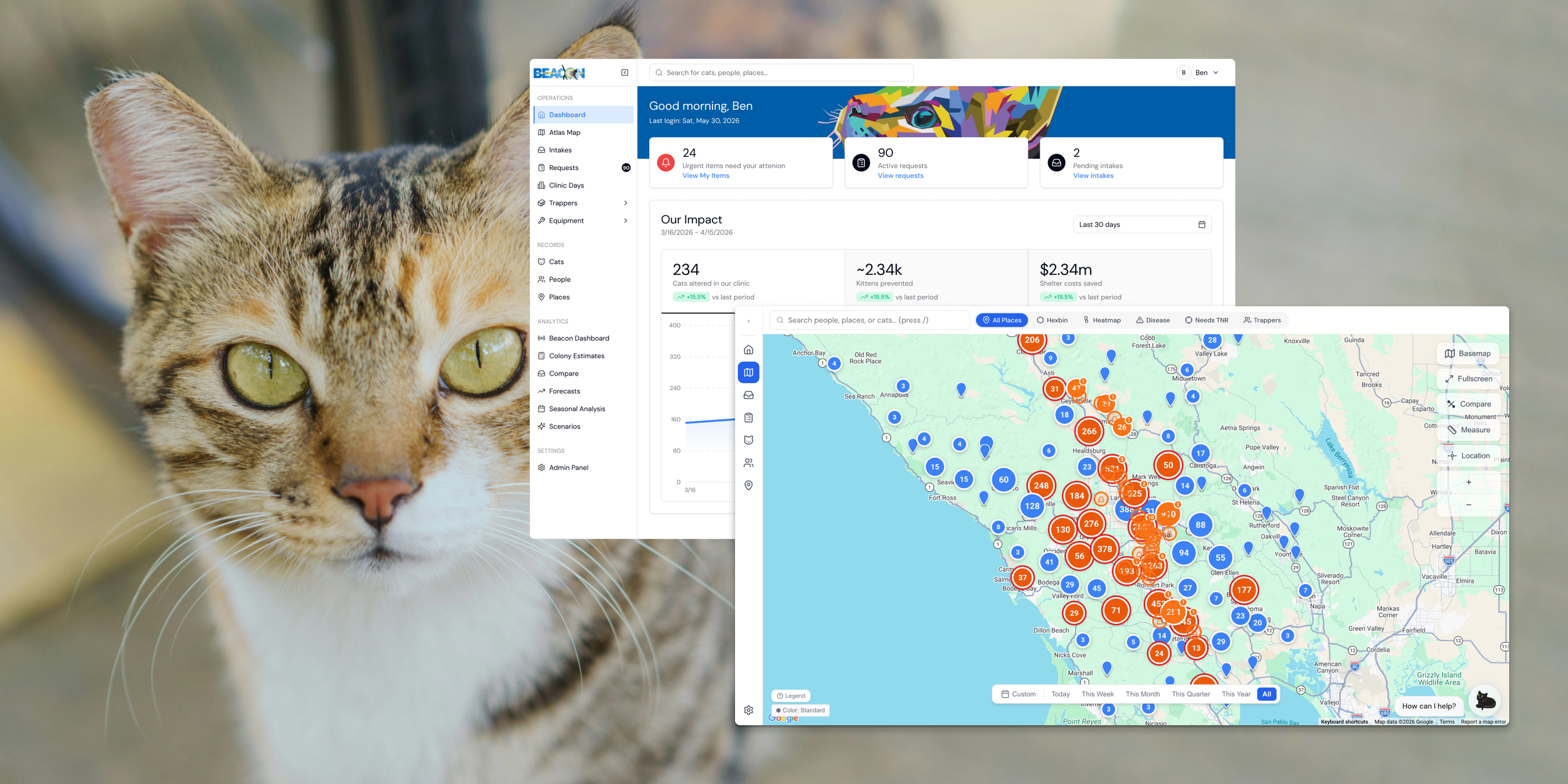
Designed an interactive, data-rich map for every employee to access and see critical views for population tracking, disease hotspots, and trapper locations.
Modernized data storage practices to relieve manual data entry and de-duplication of existing records.
Streamlined the clinical data intake process, so every cat is easily tracked from first sighting and alteration appointment to final release back to their home territory.
Intuitive, user-friendly platform to seamlessly track case contexts for the cats, people, and places with which FFSC interacts.
Tools & PlatformsFigma
Claude Code
Linear
Vercel
Supabase
ProblemTrap, Neuter, Return (TNR) is the most effective and humane solution to mitigating the issues of unowned cat populations in our ecosystems. But population reduction depends on timing, location, and strategy.
Altering the right cats, in the right area, at the right time, can change the future of an entire colony. Without better data and strategic insights, FFSC can only respond to the loudest need, not the greatest impact.
ApproachMy primary responsibilities were to create and advise on design systems and user experiences within the product, conduct user interviews to gain insights into user problems, and minor project management for our team.
The small, nimble team at FFSC were eager to use new generative tools such as Claude Code, Vercel, Supabase, and more to modernize and rapidly ideate on what this data-powered platform could look and feel like.
With these tools at our command, I worked asynchronously with the Trapping Coordinator and Engineers over 4 months to deliver solutions in these following areas:
See where the need is greatest. I co-designed a map view that aggregates cat data by key layers such as disease risk, population density, and date so coordinators can prioritize at a glance.
Prioritize cats with the most impact. I advised on a triage framework within the intake flow that flags high-risk cats based on disease criteria (such as FIV positive), ensuring the most urgent cases surface automatically.
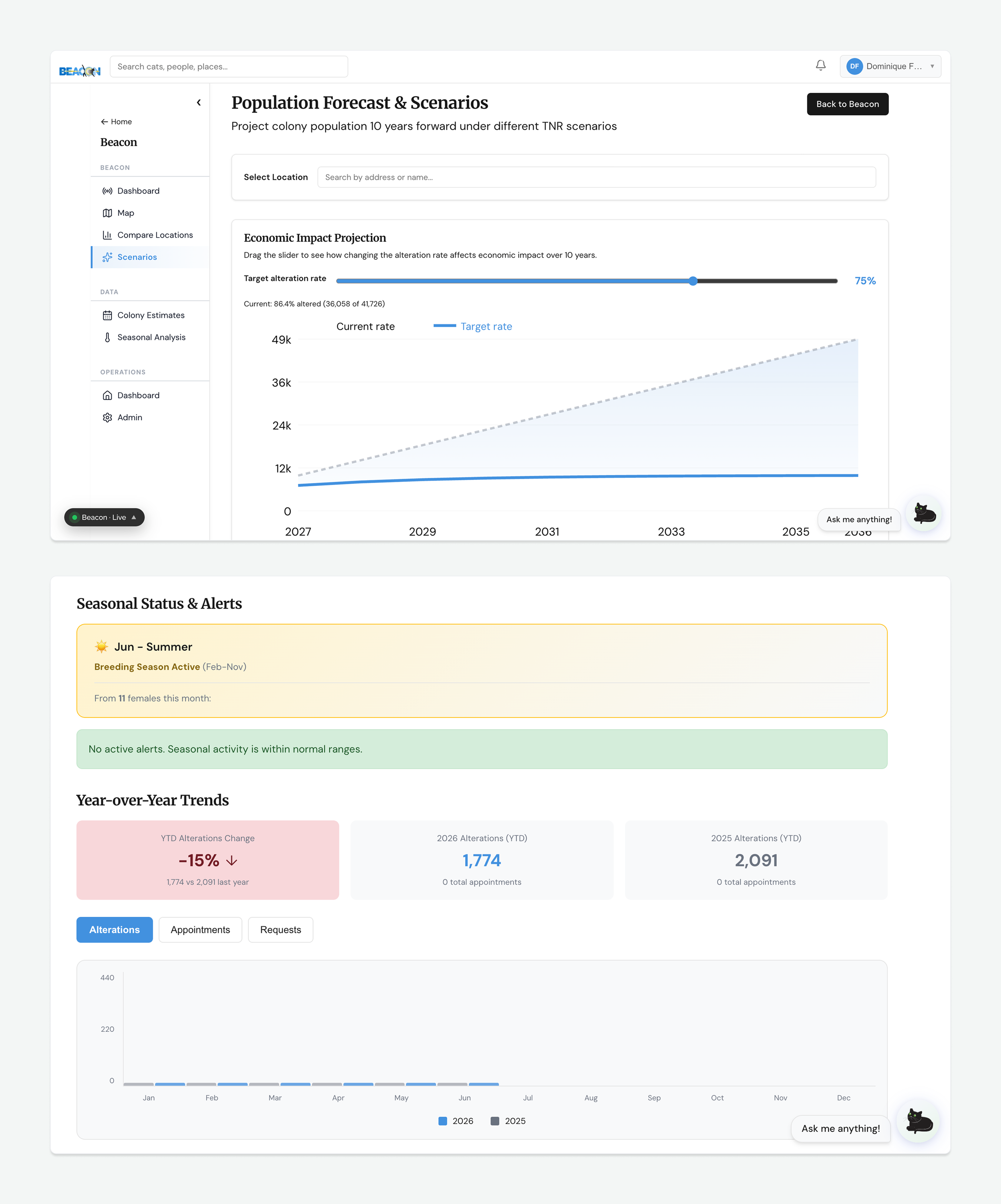
Forecast how populations will change over time. I designed the frontend framework for users to simulate various forecast scenarios, such as population projections, and embedded these insights across key touchpoints within the product.
Direct clinic and volunteer capacity. I designed workflows that connect population data directly to volunteer resource availability, closing the gap between insight and action.
LearningsFrom my time working on data-heavy reporting and analytics dashboards, I learned that creating a simple, intuitive, and effective dashboard to quickly scan key stats and spur users to proactive approaches to their business objectives is a powerful, unifying means for telling the plain truth about performance.
Nonprofit teams deserve the same strategic services and insights as any commercial product. Though FFSC’s target audience is unowned cats, the stakes they are weighing (population overwhelm, ecosystem damage, and kitten mortality) and incredibly urgent and impactful to our communities in Sonoma County.
Adopting new technology like generative AI products came with some expected delays, such as cleaning up inconsistent design patterns, but it ultimately sped up the back-and-forth between design and engineering, so that the product was able to be rapidly tested and iterated on by beta users.
Good design makes saving the lives of cats all the more possible!
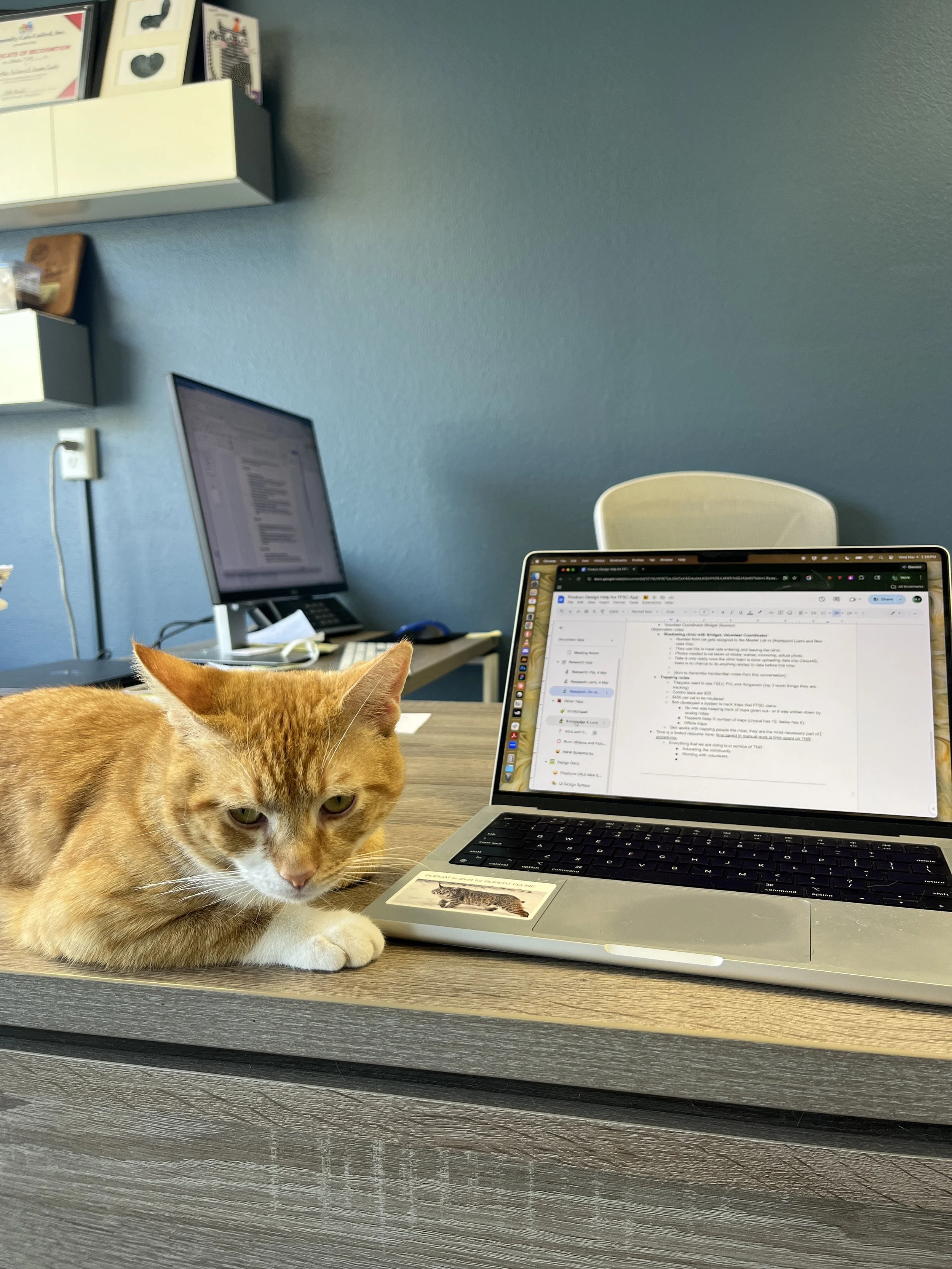
Conducting user research on-site with one of cats benefitting from FFSC’s care.